
Beer Reviews
How to Build a Mix-Six Pack at a Craft Beer Store: A Checklist for Curious Drinkers
September 20, 2026
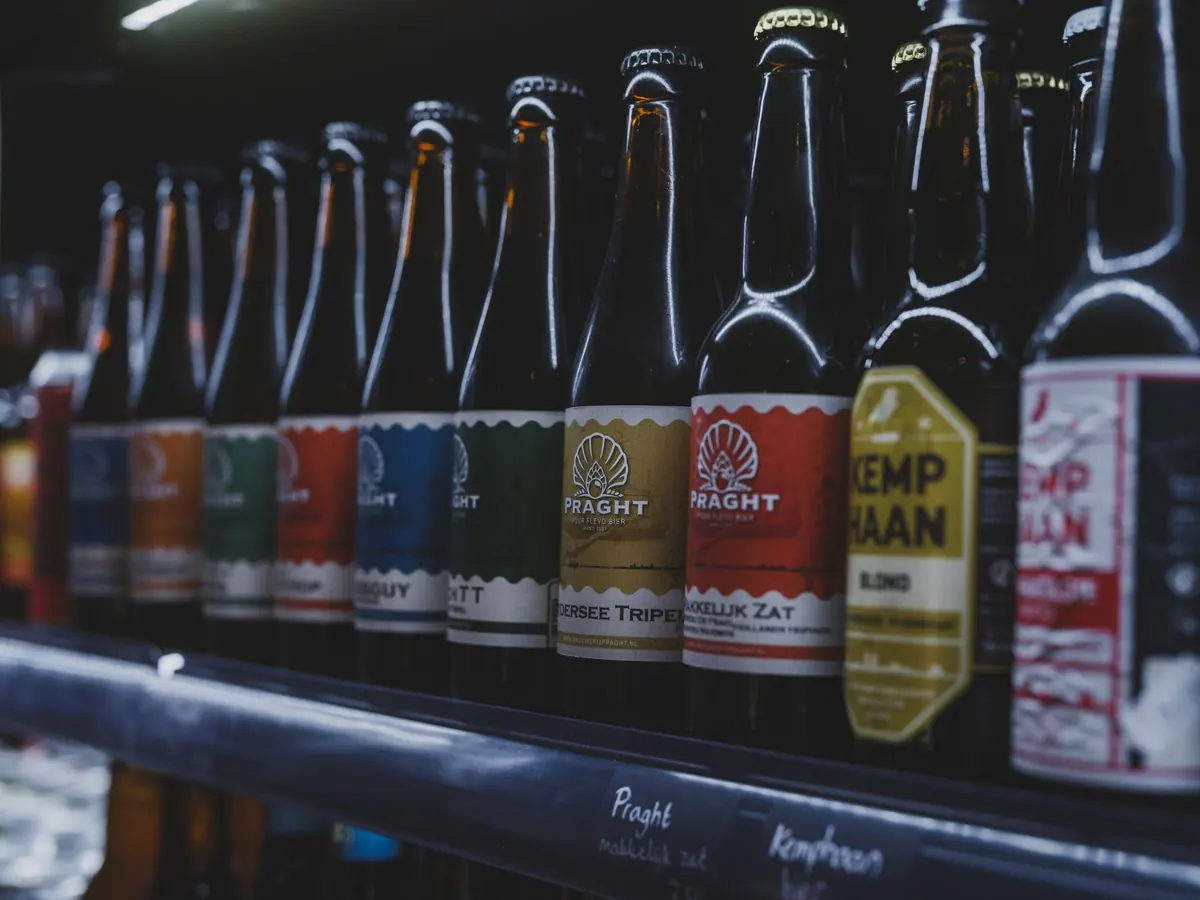
The mix-six shelf is the most underrated corner of a good bottle shop. It sits there with a handwritten sign and a few empty slots, asking you to do something a full six-pack never does: choose. Four hundred labels on the wall, six slots in your carrier, and maybe ten minutes before you start feeling like you're holding up the line.
The good news is that building a mix-six isn't a test of beer knowledge. It's a small, cheap experiment, and there's a repeatable way to do it that leaves you with six bottles you actually want to drink instead of four you like and two that sit in the back of the fridge until spring cleaning.
Decide What the Six Is For
Before you touch a shelf, answer one question: is this pack for a party, a quiet Friday, or learning? The answer changes everything you pick.
For a gathering, lean on lower-alcohol crowd-pleasers — pilsners, wheat beers, session ales — and skip the barrel-aged monster nobody finishes. For a quiet evening, three or four bottles with real character will do more than six mild ones. For learning, you want contrast: beers that are different from each other on purpose, so you can taste the difference rather than guess at it.
One honest note on value: single bottles in a mix-six usually cost more per bottle than the same beer in a full six-pack. You're paying for variety, not for a bargain. Treat it as tuition.
Pick One Anchor Beer, Then Ask Questions
Start with a bottle you already trust — the pilsner you drink every week, the IPA you had on draft last month. That's your anchor, the reference point everything else gets measured against.
Then let the other five slots answer questions you're curious about. Does this brewery's stout hold up to the one you love? What does a saison taste like right next to a witbier? Is the hazy IPA everyone mentions actually different from a West Coast one?
What you want to avoid are the two extremes: six beers so similar they're redundant, or six beers so unrelated that nothing connects. A pack works best when each bottle has a reason for being there — even if the reason is simply "I've never heard of this."
Four Levers to Pull for Real Variety
Most style names are just combinations of four things. Learn the four and the wall of labels turns into a menu.
- Malt: pale and clean, toasted and biscuity, or dark and roasty. This is where bread crust, caramel, coffee and chocolate notes come from.
- Hops: herbal and floral, citrus and pine, or dank and tropical. Hops also supply bitterness, but aroma is what most drinkers notice first.
- Yeast: neutral and clean in lagers and many American ales, fruity and estery in English ales and hefeweizens, spicy and dry in saisons and many Belgian styles.
- Strength and body: a 4% lager and a 10% imperial stout are different experiences even when they share a family tree.
A useful rule: between any two bottles in your pack, change at least two of those four. Change only the hops and you'll learn what hop varieties taste like. Change everything at once and you'll learn that beer is broad, which you already knew.
Read the Shelf Talker, Then Question It
Shelf talkers — those little cards clipped to the shelf edge — are written by distributors and brewery reps to sell bottles. That doesn't make them useless. It makes them a starting point.
Trust the factual parts: style, ABV, brewery and location, seasonal or limited status. Discount the adjectives. "Juicy," "crushable," "dangerously smooth" and "perfect for any occasion" are marketing doing its job, not information you can plan around.
Then flip the can over. Many craft breweries print a packaged-on or canned-on date on the bottom. For hop-forward beers — pale ales, IPAs, anything hazy — fresher is better, because hop aroma fades over months. Strong dark beers, barrel-aged stouts and barleywines hold up much longer, and some are intended to sit a while.
If you can't find a date, ask. One question to the person behind the counter — "What came in this week?" — beats ten minutes of squinting at labels.
A Six-Slot Blueprint
When you want a pack that covers ground without becoming homework, work through these six slots:
- A crisp, low-alcohol lager or pilsner — your palate cleanser and your safety net.
- A hop-forward pale ale or IPA, ideally canned recently.
- A malt-forward beer: amber ale, brown ale, bock, or a dark lager like schwarzbier.
- A yeast-driven beer: saison, witbier, hefeweizen or a Belgian-style ale.
- A strong sipper: imperial stout, barleywine, doppelbock, or something barrel-aged.
- A wild card: smoked beer, gose, fruit lambic, or a style you can't pronounce yet.
You don't have to follow it exactly. If the party is tomorrow, swap the strong sipper for a second lager and keep slot six.
Three ready-made versions
- The bright pack: pilsner, helles, witbier, gose, session IPA, dry saison.
- The dark pack: schwarzbier, brown ale, porter, doppelbock, imperial stout, barrel-aged stout.
- The hop pack: pilsner, American pale ale, hazy IPA, West Coast IPA, double IPA, black IPA.
Drink Them in an Order That Teaches You Something
Line the bottles up lightest to strongest and pour small. Four ounces is plenty for a beer you're tasting rather than drinking, and small pours mean you can get through several without the evening turning into a blur.
Taste the anchor first, then the beers that contrast most with it. Keep one note per bottle on your phone — "too sweet," "grapefruit, would buy again," "tastes like a campfire, in a good way." Specific words beat scores. You'll forget a number; you'll remember "campfire."
Store whatever you don't open upright, cool and dark. Heat and light age beer badly, and a mix-six that rides home in a hot car is a wasted mix-six.
One more thing worth saying plainly: six different beers in one sitting is a lot of alcohol for one person. Split the pack with a friend, spread it over two evenings, and if you're pregnant, taking medication, or managing a health condition, talk to a professional rather than guess.
Make the Next Six Easier
Keep the notes. Next time you're in the shop, buy two bottles of whatever surprised you and one bottle of something in a style you've been avoiding. Curiosity compounds faster than knowledge does, and six slots is enough room to keep both moving.
The shelf will still look overwhelming the second time. You'll just have a better idea of where to start.
Related posts
More stories you’ll love reading